fRIENDS FOR 25 YEARS.
DOZENS OF PROJECTS.
SCULPTURES IN THE THOUSANDS.

wATCH THEIR STORY
INSPIRATION BEHIND THE FILM
Heidi Ruth and Dan Dittrich began their Zimbabwe explorations in 1997, when Heidi – then Heidi Riggenbach – received a one-year teaching Fulbright fellowship in east Africa. The new Africa University in Mutare, Zimbabwe, is located in the rich, green Eastern Highlands of the country, bordering Mozambique. Heidi took a one-year leave from her University of Washington job as professor in the English department, and Dan joined forces – “Let’s do this!” Ditching his work commitments for a year, he accompanied Heidi and their two young children to an unknown continent.
Within months, Dan had formed a tight friendship with Wilson Mhasho, originally the groundskeeper for the Greenglades Flats, the apartment complex where the professors and families were housed. A part-time worker for Africa University as well, Wilson supported his growing family with two jobs plus, while his wife Josephine worked as a bookkeeper.
Dan and Wilson become fast friends.
………………………………………………………
Heidi brews coffee after the kids go to bed, warning Wilson, “It’s strong. It might keep you up.” Heidi is off to bed to snooze, and the guys talk until 1:00 in the morning.
Out of these conversation-rich meetings came schemes, plots and ideas about how to support locals in their entrepreneurial endeavors - from vegetable marketing to vehicle mechanicing, from quarrying stone for sculptors to trucking in the local community.
Dan and Wilson ride for hours meeting sculptors and purchasing their art.
Dan is invited to Wilson’s village, the Honde Valley, where he meets the entire extended Mhasho family and learns of the near-miracles that Wilson has accomplished for his village.
THE FAMILIES
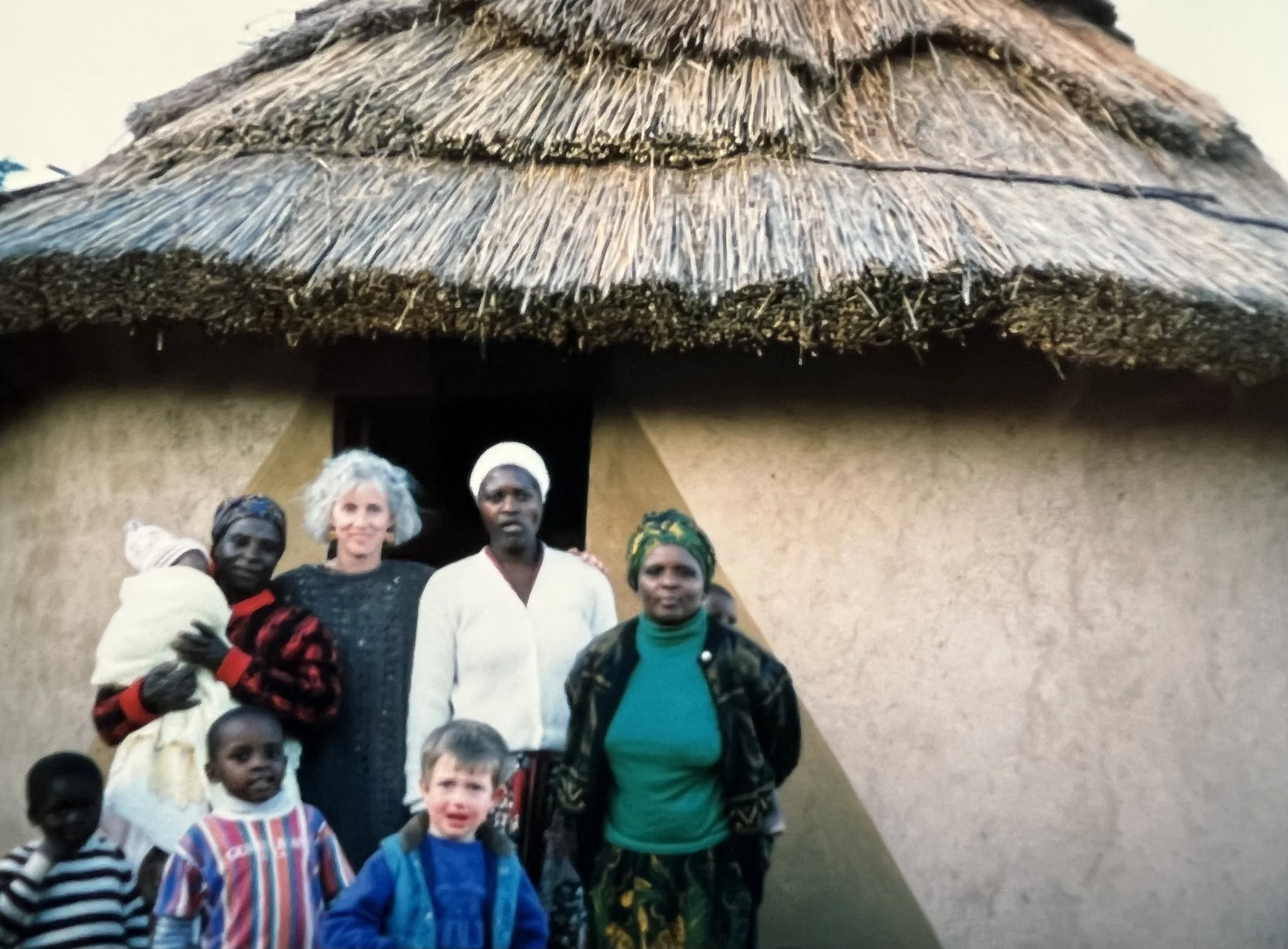
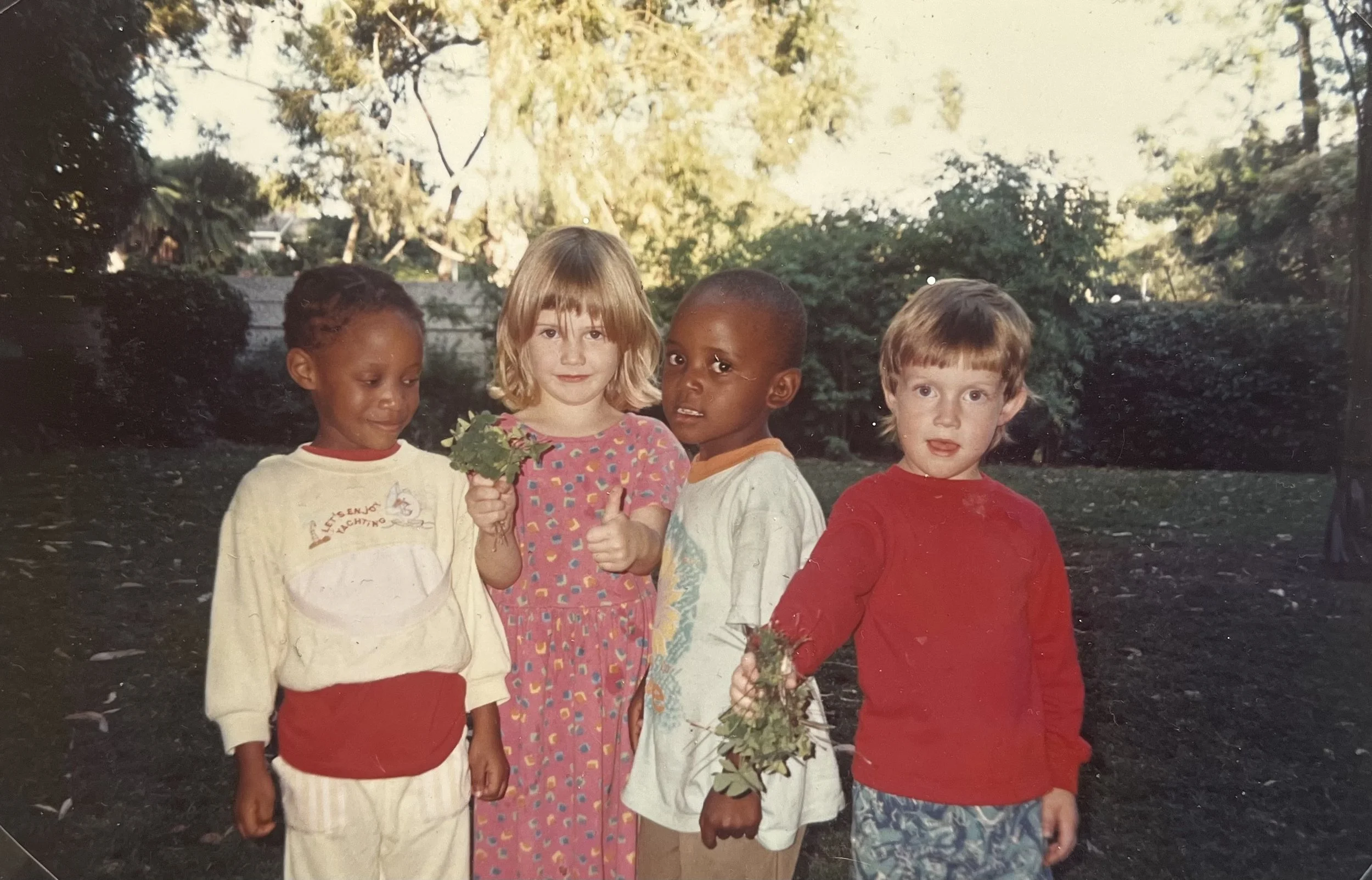
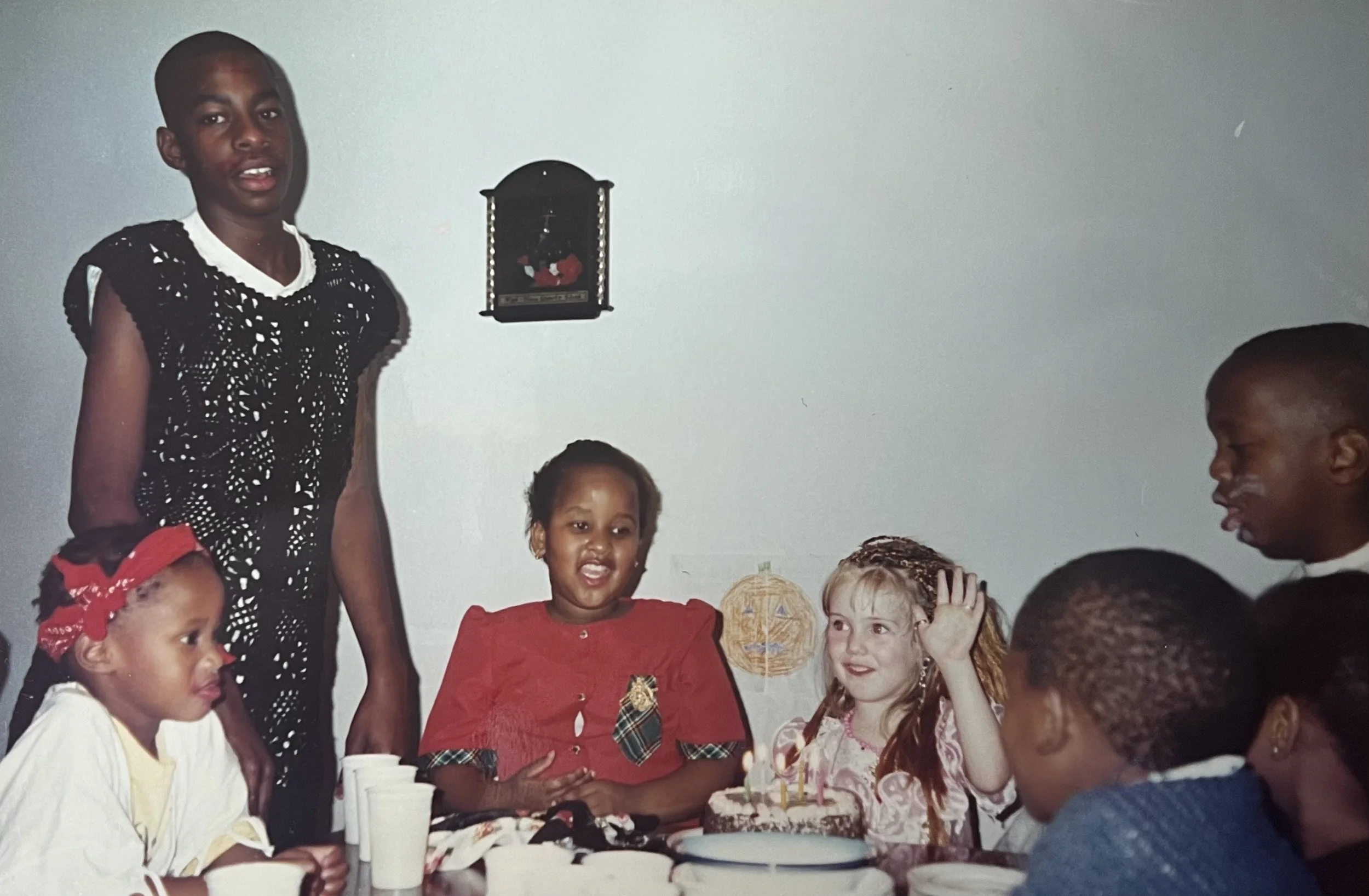
Through the Mhasho’s and the other families where they resided, Heidi and Dan witnessed up close the kind of general extended family cooperative caregiving, much more naturally inclusive than where they had come from: “It takes a village.”
Young Lily and Robin benefitted richly from the care and child-attentive approach. They integrated seamlessly into the kids’ culture, playing with Wilson and Josephine’s son Young Wilson as well as with the ten or so African children housed at Greenglade Flats. Outdoors in the red dirt sprinkled with pokes of regularly mowed patches, they played Red Rover/tug of war, Zimbabwe-style line games, speaking with British-Zim accents, “Here come the Bree-tish!”
They learned to eat tasty ants and run from all injuries involving blood, as AIDS was prominent. They learned to not tease young monkeys, to not walk in vegetation where snakes can hide, and to tread carefully on the path with the killer bee hives high up in the trees.
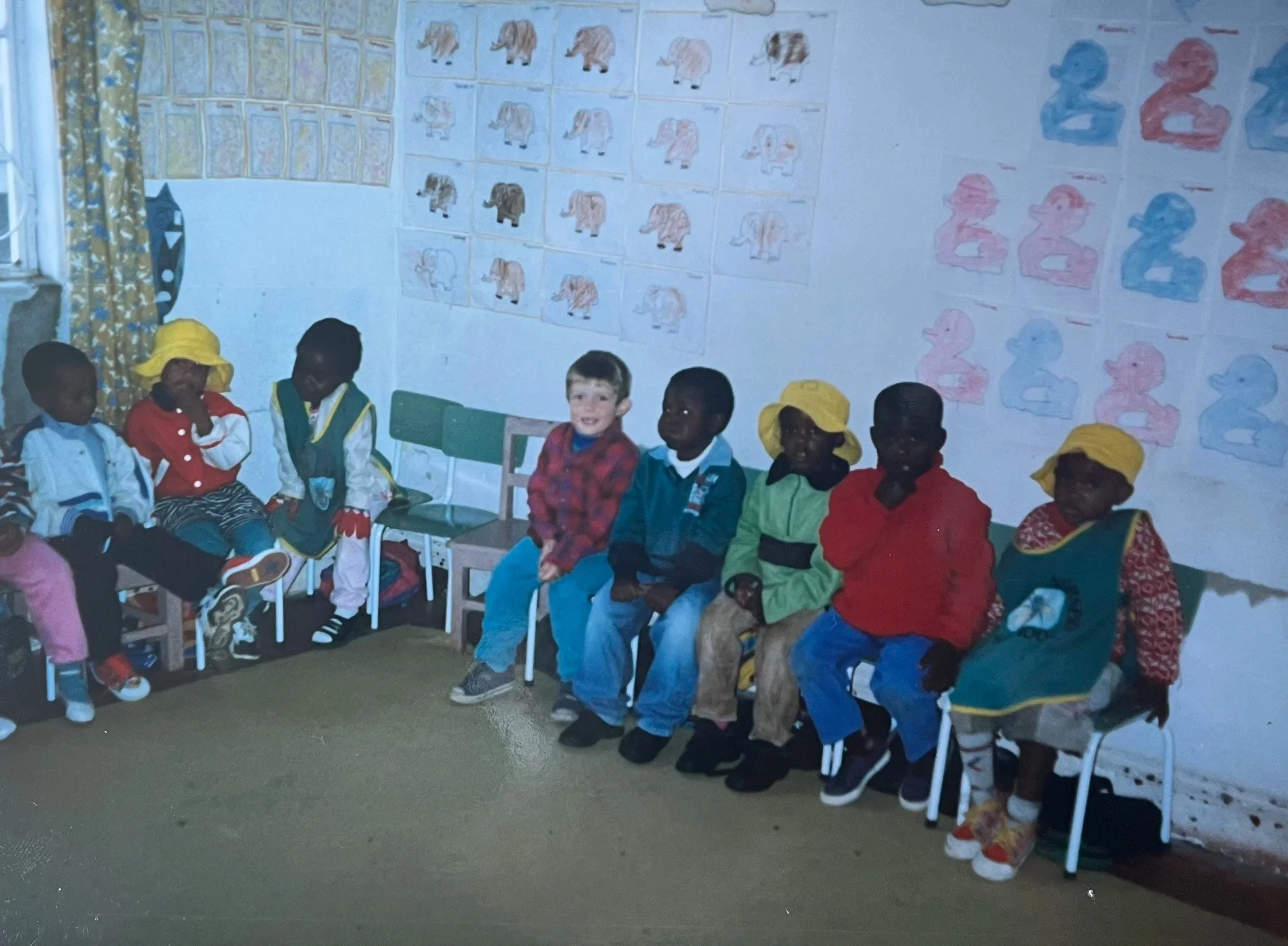
Son Robin attended day care with twenty others, and like his parents in the 1950s, he took naps on mats on the floor with the others. Daughter Lily attended first grade as one of three white kids in a mass of twelve hundred brown and black-skinned Africans, mostly Zimbabweans, some ‘mixed race’ as it was commonly known. Lily’s class was in English with lessons in the native language Shona sprinkled in. By the end of their stay in Zimbabwe, Lily was able to translate Shona into English for her parents. At the airport – “They want to look in your bags now,” Lily translated, while the border officials, who spoke perfect English, smiled slyly.
HEIDI’S WORK
Some of Heidi’s fellow faculty members, the non-Zimbabweans and ex-pats, also resided at Greenglade Flats, which provided a rich intercultural education for Heidi and family. Sometimes the experience was not so graceful. For example, Zimbabwean children don’t do birthday presents. Advice: Don’t go to the trouble of presenting the birthday kid with a wrapped present, in front of a full audience of parents-and-extended family! It's a mystery to them, and likely a disappointment – even if the gift is something pretty great. Instead, give money, presented in a special card. Not too much, not too little.
Heidi learned to ask before acting. Ericah, the Dittrich’s beloved housecleaner and caregiver for Lily and Robin became a trusted source of information on the local people, customs, traditions and language.
Heidi pretty quickly found English department colleagues that were also helpful ‘informants’, showing her the ropes. She couldn’t help introducing a bit of American university culture into her classrooms, diverse populations of primarily East African countries, Kenya, Burundi, Zambia. Her B.A. English students soon became fans of small group discussions, group projects and, presentations. They openly enjoyed her “informal” approach, much more interactive than being ‘lectured at’, which was what they were used to.
After Heidi’s return to the States, two of Heidi’s favorite students were accepted into Master’s degree programs in U.S. universities.